
When Did Being A Student Become So Competitive?

“I can’t solve a single problem correctly!” I shout into my calculus textbook. After I toss my pencil and calculator onto the desk, I close the textbook and shove it over to make room to lay my head down into my crossed arms. There’s only 24 hours until the calculus II exam starts and cramming is doing nothing but consuming time. After endless practice in the most insufferable class of this semester, it seems no further review will improve my understanding of sequences or series. About a minute passes before I notice that my cheeks are wet and that I had dotted my sleeve with tears. It takes every nerve in my body to keep from having a nervous breakdown. Without much time or many options left, I text Ryan, one of the higher-than-average classmates, to ask for some explanations. I just need a little confidence booster. His reply gives me the exact opposite: it would be impossible to learn any concepts in this amount of time before the exam. Sorry Faith.

Unbelievable!

My mind is telling me to give up, but I know if I do, I will not only fail the suggested problems, I’ll fail the final. The biggest problem I faced: lack of motivation.

It seems like I’m not the only one facing this issue, though. An interesting study conducted by the Adana Science and Technology University, in Turkey, asks six questions to 9th grade students regarding motivation, willingness to learn, level of subject difficulty, and teacher impact in their class. During the study, they found a strong correlation that suggests that the willingness to learn increases motivation and, in return, high motivation increases the capacity to learn. A positive feedback loop! The answers they received to the questions mostly express a recurrent lack of interest in subject matter and difficulty in memorizing dense material. This makes motivation for a subject a lot harder to achieve.

As a student in health science at Dawson College, I can tell you that it’s been a constant struggle to find motivation to study for many of my science classes. My R score sits just above a 31, and if I hadn’t asked my friends how they scored, I wouldn’t have realized that I was on the low end of a health student’s R score range. Before I take a test, I see my future being spelled out by each shameful grade I’ve received. A twinge of guilt sits in my stomach, regretting all the nights I spend procrastinating instead of learning. On days before exams like the calculus final, the library feels like it’s closing in on me, and –– as Boyle’s ideal gas law indicates –– if the volume of a closed space decreases enough to crush me to death, then the pressure in my chest is sure to be insurmountable. I feel like I have to become the best student I can be with no mistakes and flawless grades for science programs in university to notice me in the sea of numbers. Except right now, I’m just a low grade; a two-dimensional digit on an infinite plane. Like a fractal in space, the spiral I’m falling through is never-ending.

So how are students like Ryan so motivated to compete to be at the top of the class while stomping on others to get there? In fact, there’s a reasonable explanation for why CEGEP students tend to compete and compare each other’s grades: it is essentially what the R score does. 

Vanier College’s academic advising page indicates that the R score is based on two components, with the most alarming one being that it bases its value on “how well, on average, all the Quebec students in the course or group of courses performed in their compulsory Secondary 4 and Secondary 5 courses.” Using grades from over two years ago seems like an ineffective way to be determining success. Is it to say that my R score will forever be tainted by the 66% I received for my secondary 4 math ministry exam? I’m not too sure about that –– the R score is a mysterious calculation. However, the other component of the calculation is based on the “student’s position within the course or group of courses, with better performing students receiving higher [scores].” This means that it places you in relation to your class average — the ultimate method of comparison.

Grades are the biggest factor for student motivation. People aren’t afraid to leave others behind to get ahead *cough* *cough* Ryan! It also doesn’t help that students commonly expect class averages to be given to them by their teachers to have a tangible way to judge their marks in relation to their peers. Why not judge your own marks in relation to the material you’ve learned thus far? Finland, the country that’s been crowned the happiest country in the world for 3 years, according to Forbes, is doing just that.

The Los Angeles Times offers some insight on how Finland is so successful in terms of their happiness, specifically in school. Their success is based on equity, community, and helping the weakest links step up to where they need to be. This mindset greatly contrasts to North America, where only the brightest minds are rewarded, and “happiness and success are perceived as individual pursuits, indeed, even competitive ones. In Finland, success is a team sport.” Plus, Finland’s grading system does not set students up against each other to compete with the class average, nor do the grades reflect directly on the teacher’s ability to teach.

In schools across North America, teachers take the blow for their students’ poor academic standing. Test scores and student enrolment directly affect the funding of a school and its teachers’ salaries, according to Tuscon Weekly. The Ontario government has even cut over six hundred million dollars to its schools in 2019, eventually expecting there to be “thousands fewer teachers” in the next four years. It’s unimaginable to fund schools based solely on numbers over the care that a good educational system needs. In fact, the teachers interviewed from Finland said they would quit if funds were based on their teaching skills. Moreover, the study in Turkey received a unanimous answer on the topic of teacher impact, indicating that the students felt that 100% of the learning experience Is impacted by their teacher. Teachers play the single most important role in education and are the most essential figures in learning everywhere; their value is paramount. There’s a term in environmental ecosystems for a species like this, known as the ‘keystone species’. If it is removed from the ecosystem, the entire ecosystem crumbles, leaving a mess of non-livable conditions in its wake.

This puts an insurmountable weight on teachers’ shoulders to keep each student happy and engaged with the material they’re teaching. Natasha Goodz, a recent graduate from McGill University’s department of education, supposes that “a lot of the pressure comes from the teachers themselves, knowing that they have so much responsibility in shaping their students into the people they’re going to be.”
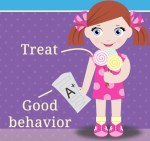
The most difficult part is getting students into the habit of studying and becoming more motivated to be better students. Often times, teachers use what is known as operant conditioning to encourage their students through positive reinforcements. This conditioning works with rewards and punishments to increase or decrease a particular behaviour. When students do their homework, a teacher can condition their students to expect a Kahoot game with prizes for the winners! When teachers notice a lack in participation and work habits, they can condition the class to expect a pop quiz when homework is incomplete. Then homework will likely be done in the future to avoid such an event to occur again.

I was definitely no fan of my sec 5 physics teacher’s conditioning method. It was difficult to feel any motivation when he often expressed us as being failures very pointedly with “The initial velocity of the rock falling vertically in free fall is…? Come on, you should know by now that it’s the same number you’ll see on your final grade: zero!”

I wasn’t laughing. There must have been a better way to get us understanding a simple physics concept.

Goodz explains that the best way to get students engaged and to feel motivated is by creating relevance with things that actually matter to them. “If it’s fun, exciting, and has meaning to it, they’re going to learn more,” she states.

A happy class environment is magnified by motivation. I can remember the first time my biology II teacher recommended browsing Science Magazine last semester for a piece of reading outside of the course requirements because the articles were “interesting and relevant.” For a few split seconds, I actually considered it. Then a resounding groan hit the class. Without skipping a beat, the bio teacher recognized how little her students were motivated to read any articles because it ostensibly posed no benefit if we did nor any threat if we didn’t. So she did what all teachers would do to get their students to do something they’re unwilling to do: if we read an article, we’re granted bonus marks. A reward!

According to Caitrin Blake from Resilient Educator, reward-driven motivation is one of two types of motivation known as extrinsic motivation, the other type being intrinsic motivation. Extrinsic motivation helps students become more driven and competitive because they know that they will receive something from their work. Blake states that if this reward is removed, students’ interest “diminishes entirely.”

Ironically, a student’s lack of interest in their courses is quite an interesting dilemma because it raises the questions: Why is this field of study meaningful to me and how rewarding will a career in it be?

Having little value for a field of study but nevertheless working for excellent grades stems from a mindset of setting performance goals rather than learning goals (Ambrose et al. 72). For example, physics makes me confused and afraid for the outcome of my grade. I’ve joined the “do well enough just to pass” performance goal. I’m being extrinsically motivated by the desire to be accepted into a science-related field in university. But the same goal cannot be applied to my interest and enjoyment in learning the piano. There are no passing grades or fear of failure. It’s intrinsic motivation –– the desire to learn & set learning goals –– that keeps me practicing.

I’m sure by now you’ve noticed that extrinsic motivation creates a disparity between people who have a passion for fundamental learning and application of knowledge and people who absorb facts and calculations to throw them onto paper for a numerical grade. It teaches students that success, in its naked form, is only a reward. 

By nature, animals crave rewards, so it’s not a bad thing to expect a reward after hard work. Think of the last time you had a piece of chocolate. You probably ate it for more than its delicious taste and nutritional benefits. Chocolate contains the key ingredient tyrosine which is the component of the neurotransmitter dopamine, linked to the reward and pleasure response centre of the brain. When the dopamine pathway of the brain is activated, the brain searches for the source of that dopamine spike again, making you crave more chocolate (Erkane). This concept can be applied to receiving a grade. If you worked hard for a test and didn’t get the grade you were expecting, reward yourself. It will remind you to keep trying. And in the case of intrinsic learning where your progress does not yield grades, remind yourself why the end goal matters, because “the mind is virtually inexhaustible when it is engaged in something it perceives as meaningful” (Shore).

How then can we find enjoyment in the subjects we learn to fuel our own intrinsic motivation? Do classes need to focus less on grades and more on the real world beauty of a subject to get students to be truly appreciative of it? It’s a tough balance that we haven’t quite reached yet. Brooklyn Middle School 442 has come very close to finding such a balance with their new grading system — or rather lack of grading, but is it sustainable? Time will tell. Maybe you don’t exactly know where to start to feel motivated. A good hint is to start with yourself. Take it from me, I still have a lot to learn about being a student. Sometimes it takes more than staring at textbook page filled with garbble and a few low grades to realize that there’s more that needs to be done to achieve my goals. Standardized tests that pressure students to compete with their classmates need to be thrown out the window at an initial velocity of 50km/h. Celebrate high grades as a milestone in your knowledge and understanding, even if it’s a small milestone, and don’t forget to learn from the low grades. But definitely keep the comparisons between your success and your friends’ as far away as possible. It feels rewarding to motivate yourself without climbing above others to reach your goals.

New Intro

“I can’t do a single problem correctly!” I shouted into my calculus textbook. I threw my pencil and calculator down onto the desk and covered my face with my hands. About a minute passed before I noticed that my palms were wet and that I had dotted my textbook with a few tears. It took every nerve in my body to keep from having a nervous breakdown. There was 24 hours until the calculus II final exam and it seemed no further practice or review would improve my understanding of sequences or series. My mind told me to give up trying, but I knew if I did, I’d really end up failing the final. The problem I faced was lack of motivation. 

I had to pull it together. Your classmates know what they’re doing, I thought, they can help you. After all, the class average was 76%, which is decent for a calculus II class. I texted one of my friends with a high average to ask for some explanations. I just needed a little confidence booster. He replied that it would be impossible to learn any concepts in this amount of time before the exam. Sorry.

Weekly Writing Challenge 5

  1. Education: The Biggest Rollercoaster of My Life
  2. Education: A Cycle of Abuse.
  3. The Motivated Student
  4. All Aboard the Motivation Train!
  5. How to Retrain Your Brain to Think like a Student Rather Than a Sack of Potatoes 
  6. I Can’t Think Clearly
  7. When did being a student become so hard?
  8. When did being a student become so competitive?
  9. My brain can do a lot of things, but learning doesn’t seem to be one of them.
  10. Anything You Can Study, I Really Can’t Study Better.

Weekly Writing Challenge 4

Part 1

“Maybe you don’t exactly know where to start to feel motivated. A good hint is to start with yourself. Take it from me, I still have a lot to learn about being a student. [It’s not an easy job, and I wished I got paid to do it](I’ll be referencing something about this in the final piece). Sometimes it takes more than staring at textbook page filled with garbble and a few low grades to realize that there’s more that needs to be done to achieve our goals. It’s a fact that standardized tests and pressuring students to compete with their classmates needs to be thrown out the window at an initial vertical velocity of 50km/h. Celebrate high grades as a milestone in your knowledge and understanding, even if it’s a small milestone, and Don’t forget to learn from the low grades. And definitely keep the comparisons between your success and your friends as far away as possible. It feels rewarding to motivate yourself without climbing above others to reach your goals.

In this conclusion, I am trying to highlight what I’ve learned through school and how it has made me a better person. I am also trying to strike a note that I wrote at the beginning to be able to come full circle (something I have difficulty accomplishing). 

Part 2

  1. I received my first CEGEP R score at Dawson College and it showed me that I have a lack of motivation and no certain goals for the future. 
  2. The R score is a mysterious calculation which is very different from Finland’s grading system. 
  3. Teachers are a fundamental part to education.
  4. Psychological conditioning methods keep students motivated. 
  5. Motivation is what keeps students and workers alike to continue on with their daily routine; they’re in it for some sort of reward.
  6. Without a feeling of motivation, what are we doing with our lives?

Weekly Writing Challenge 3

Part 1: Rewritten Paragraph

“My eyes were heavy and sore now, staring at my future being spelled out by each shameful grade I’ve received. A twinge of guilt sat in my stomach regretting all the nights I spent procrastinating instead of learning. The school hallways were closing in on me, and––as Boyle’s ideal gas law indicates––if the volume of a closed space decreased enough to crush me to death, then the pressure in my chest was sure to be insurmountable. I had to become the best student I could be with no mistakes and flawless grades for science programs in university to notice me in the sea of numbers. Except right now, I was just a low grade; a two-dimensional digit on an infinite plane. Like a fractal in space, the spiral I was falling through was never-ending. My mind was a prison.

Why did I start comparing myself to my friends? 

In fact, there’s a reasonable explanation for why CEGEP students tend to compare each other’s scores: comparing is essentially what the R score does. (Lead into the brief R score).”

I added more imagery and added nods to great scientific ideas, like the fractal and Boyle’s law. I made relevant metaphors and added one of them to my last sentence. I think I made the paragraph into a stronger pathetic argument, albeit maybe a little clustered, but I like it. I also added a closing sentence “my mind was a prison” to really emphasize that I felt trapped in turmoil as many students do after seeing that they’ve achieved lower than expected. The only issue I see is that the fractal and Boyle’s law may be difficult to understand.

Part 2: Rewritten Intro

Imagine stepping off the bus to face the building you’ve put thousands of hours of sweat and dedication into and boldly smiling right at it. It’s finally your year to accept the award of employee excellence. Adrenaline adds a pep to your step. Not a minute of the morning goes by without thinking about the smooth glass token of hard work you will be holding while your boss looks proud to have you as an employee. Lunch time rolls around and it’s time. Your boss makes the announcement: The employee excellence was deferred because each employee’s efforts were outstanding this year. The smile that lingered on your face slowly fades away. Everyone is being equally recognized. You can’t believe this! It’s great for everyone, sure, but it can’t compare to the level of satisfaction you would feel if everyone celebrated you! The extra hours and efforts are starting to feel pointless now that you haven’t been personally recognized for them. Except, the work you did all year is still the same work you were proud of moments ago. Why is it that your view has changed since this morning? It all comes down to motivation and how your mind benefits from it.

Don’t mind reading this second part. It’s just something I thought of.

[Imagine you’re walking to school one day, it’s raining and dreary, but you’ve got an umbrella and a smile on your face. You’re getting paid to go to school to learn about your favourite subjects. Then, your teacher announces that your pay is getting taken away. This is blasphemous! They can’t take your pay away, what about your education? How will you feel motivated to learn?]

Second Draft

The sun was just rising one Monday morning in February as I rode the 7:15am bus on my way to Dawson. My phone light woke my sleepy eyes as I scrolled through last minute notes, preparing for my chemistry of solutions test that day. Relax, I reassured myself, You’re going to do well. At the top of my screen, a small orange flower icon appeared. I slid down the Omnivox notification to read: Your R Score has been recalculated. I got a mini heart attack, eyes now fully awake, ready to find this new information; I just about fell out of my seat. I opened the Final Grades and R Score menu to feast my eyes upon my first R score: a 30.885! 

I felt happy with my score, although I didn’t know how much happiness I should’ve felt. I considered my academic performance from last semester and thought I was in great standing, but I wasn’t sure if I should have celebrated. The mistake came when I texted a friend to ask how she scored. She exclaimed that she got a 38.3! I held back a tear. The feeling of curiosity and regret snowballed into marching to school with my life’s purpose set forth to find all of my friends one by one and ask them how they scored, all of their answers ranging from 32-36. 

Mission complete. I was on the low end of a health student’s R score range. 

My eyes felt tired again. I was staring at my future being spelled out by every grade I’ve received. I wondered how it was possible to improve from here. An enormous pressure was growing inside of me to get perfect grades from now until I exit CEGEP because it was the only way science programs in university would notice me in the sea of numbers.

Why did I start comparing myself to my friends? There’s a level of competitiveness in school that could be closely matched to that of McDonald’s and Tim Hortons in terms of their coffee. It’s really 50/50, but no one’s counting. Telling my mother about my score was not a viable option. First of all, she’d freak. Second of all, I’d have to go through the labour of explaining how the R score works and what it is, when I’m not even sure myself. So I did some digging.

The academic advising page on Vanier College’s site indicates that the R score is based on two components, with the most alarming one being that it bases its value on “how well, on average, all the Quebec students in the course or group of courses performed in their compulsory Secondary 4 and Secondary 5 courses.” 

Using our grades from 2-3 years ago seems like an inappropriate way to be determining success. Is it to say that my R score will forever be tainted by the 66% I received for my sec 4 MEES mathematics grade? I’m not too sure about that––the R score is a mysterious calculation. However, I do know that the R score is used to weigh a student’s progress against that of other students in a fashion similar to how a phys. ed teacher would tell girls to run straight down a track as fast as they could, then tell boys to run zig zag along the same track because of their superior strength, to test both groups’ speed. It also doesn’t help that class averages are also commonly expected by students, from their teachers, to have a tangible way to judge their own marks in relation to their peers. Why not judge your own marks in relation to the material you’ve learned thus far? Finland, the country that’s been crowned the happiest country in the world for 3 years, according to Forbes, is doing just that.

The Los Angeles Times offers us some insight on how Finland is so successful in terms of their happiness, specifically in school. Their success is based on equity and community and is the preferred basis over rewarding excellence only to bright minds, which is what North America does. Focusing on sportsmanship paints a brighter classroom environment, where helping others out is the best thing to do, no questions asked. This is generally a fairer way to treat students and teachers alike, when we are often feeling trapped and clustered in school for almost the entirety of adolescence. Plus, Finland’s grading system does not set students up against each other to compete with the class average, nor do the grades reflect directly on the teacher’s ability to teach. 

My first report card in high school came in and I was only 13 years old. Despite most grades being above 85, my mother could not take her fury off the fact that I received a 67% in French while the class average sat at a precariously high 76%. Parent teacher interviews brought me solace when my phys. ed teacher reassuringly advised that “you have to have people above and below the average to make an average.”

Teachers play the single most important role in education and are the most essential figures in learning everywhere. My knowledge of our solar system (minus Pluto), the waxing and waning of the moon, discovering the nine times table trick on your fingers, watching YouTube, how to read a chapter book, and how to spell the word Wed-nes-day were all attributable to the facts, lessons, and stories that my teachers have taught me, but only in elementary school. Without teachers, I’m not sure how society and the economy would function, never mind school. There’s a term in environmental ecosystems for a species like this, known as the ‘keystone species’. If it is removed from the ecosystem, the entire ecosystem crumbles, leaving a mess of non-livable conditions in its wake.

This puts an insurmountable weight on teacher’s shoulders to keep each student happy and engaged with the material they’re teaching. Natasha Goodz, a recent graduate from McGill University’s department of education agrees with this idea and supposes that “a lot of the pressure comes from the teachers themselves […] knowing that they have so much responsibility in shaping their [students] into the people they’re going to be.” Of course, shaping kids through the educational system reigns through, most of the time, in the cases of successful business men, directors, all types of coaches, and even other teachers. They would not be working in their respective careers if it weren’t for the teachers who taught them the trick of the trade in the first place.

The difficult part is getting students to the point where they become motivated to be the best little engineer they could ever want to be. Often times, teachers use what is known as operant conditioning to encourage their students through positive reinforcements. This conditioning works with rewards and punishments to increase or, contrarily, decrease, a particular behaviour. When students do their homework, a teacher can condition their students to expect a Kahoot game with prizes for the winners! When teachers notice a lack in participation and work habits, they can condition the class to expect a pop quiz when homework is incomplete. Then homework will likely be done in the future to avoid such an event to occur again. 

I was definitely no fan of my sec 5 physics teacher’s conditioning method. It was difficult to feel any motivation when he often expressed us as being failures very pointedly with “The initial velocity of the rock falling vertically in free fall is…? Come on, you should know by now that it’s the same number you’ll see on your final grade: zero!”

 As jokes or not, I wasn’t laughing. There must have been a better way to get us understanding a simple physic concept.

Natasha explains that the best way to get students engaged and to feel motivated is by creating relevance with things that actually matter to them. “If it’s fun, exciting, and has meaning to it, they’re going to learn more,” she states.

A happy class environment is magnified by motivation. I can remember the first time my biology II teacher recommended browsing Science Magazine last semester for a piece of reading outside of the course requirements because the articles were “interesting and relevant.” For a few split seconds, I actually considered it. Then a resounding groan hit the class.

According to Caitrin Blake from Resilient Educator, reward-driven motivation is one of two types of motivation known as extrinsic motivation, the other type being intrinsic motivation. Extrinsic motivation helps students become more driven and competitive because they know that they will receive something from their work. Blake states that if this reward is removed, students’ interest “diminishes entirely.”

Without skipping a beat, the bio teacher recognized how little her students were motivated to read any articles because it posed ostensibly no benefit if we did nor any threat if we didn’t. So she did what all teachers would do to get their students to do something they’re unwilling to do: if we read an article, we’re granted bonus marks. A reward!

Ironically, the lack of interest is interesting because it begs the question that all students should consider: Why is this a field of study that I’m interested in & what will I make of it in the future?

Having little value for a field of study but nevertheless working for excellent grades stems from a mindset of setting performance goals rather than learning goals (Ambrose et al. 72). For example, physics makes me confused & afraid for the outcome of my grade. I’ve joined the “do well enough just to pass” performance goal. I’m being extrinsically motivated by the desire to be accepted into a science-related field in university. But the same goal cannot be applied to my interest & enjoyment in learning the piano. There are no passing grades or fear of failure. It’s intrinsic motivation––the desire to learn & set learning goals––that keeps me practicing.

I’m sure by now you’ve noticed that extrinsic motivation creates a disparity between people who have a passion for fundamental learning and application of knowledge and people who absorb facts and calculations to throw them onto paper for a numerical grade. It teaches students that success, in its naked form, is only a reward.
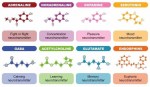
By nature, animals crave rewards. Think of the last time you had a piece of chocolate. You probably ate it for more than its delicious taste and nutritional benefits. Chocolate contains the key ingredient tyrosine which is the component of the neurotransmitter dopamine, linked to the reward and pleasure response centre of the brain. When the dopamine pathway of the brain is activated, the brain searches for the source of that dopamine spike again, making you crave more chocolate.

That’s why extrinsic motivation works. It gets the brain recognizing that getting good grades is a good thing and will elicit a release of dopamine in the brain. It’s not as direct as a shot of chocolate cake, but it’s similar in the way you crave to perform at the peak of your abilities for the best grades possible. 

How then can we find enjoyment in the subjects we learn to fuel our own intrinsic motivation? Do classes need to focus less on grades and more on the beauty and nature of a subject to get students to be truly appreciative of the subject? It’s a tough balance and we haven’t quite reached it yet. Perhaps in a future decade, we’ll make the gradual switch to a school system where grades don’t have to be feared. I’ll be able to sit back in my comfy bus seat to check my phone for the notification that my own child’s success points have been stacked to 52C.r9, whatever that means. No matter the outcome, I’ll throw a pizza party to celebrate because where grades can be found, happiness lurks.

Works Cited

Ambrose et al. How Learning Works: Seven Research-Based Principles for Smart Teaching. San Francisco: Jossey-Bass, 2010. Print. 

Blake, Caitrin. “Cultivating Motivation: How To Help Students Love Learning.” Resilient Educator. Resilient Educator, 2 Dec. 2019. Web. 11 Mar. 2020. https://resilienteducator.com/classroom-resources/cultivating-student-motivation/

Bloom, Laura Begley. “Ranked: The 20 Happiest Countries In The World.” Forbes, Forbes Magazine, 28 Apr. 2020, www.forbes.com/sites/laurabegleybloom/2020/03/20/ranked-20-happiest-countries-2020/.

McLeod, Saul A. “Operant Conditioning.” Simply Psychology. Simply Psychology, 21 Aug. 2018. Web. 11 Mar. 2020. https://www.simplypsychology.org/classical-conditioning.html

Ollila, Jorma. “Op-Ed: Why Finland Comes out on Top on Happiness and More.” Los Angeles Times. Los Angeles Times, 7 Apr. 2019. Web. 11 Mar. 2020. www.latimes.com/opinion/op-ed/la-oe-ollila-finland-happiness-20190407-story.html

ERKANE. “Serotonin & Dopamine: The Neurological Benefits of Chocolate.” Global Food Health and Society, 28 Oct. 2018. Web. 3 May 2020. web.colby.edu/st297-global18/2018/10/28/serotonin-dopamine-the-neurological-benefits-of-chocolate/.

Shore, Rebecca. Developing Young Minds: From Conception to Kindergarten. Maryland, London: Rowman & Littlefield, 2015. Print.

Weekly Writing Challenge 2

A happy class environment is magnified by motivation. I can remember the first time my biology II teacher recommended browsing Science Magazine last semester for a piece of reading outside of the course requirements because the articles were “interesting and relevant.” For a few split seconds, I actually considered it. Then a resounding groan hit the class.

Giving a student a reason to pick up a textbook or an article to advance their knowledge, rather than turning straight to Netflix, is an extremely powerful tool. However, this tool depends more on a certain type of motivation from the students as opposed to a teacher having the necessary skills to wield it.

Without skipping a beat, the bio teacher recognized how little her students were motivated to read any articles because it posed obstensibly no benefit if we did nor any threat if we didn’t. So she did [what all educators/people would do to get those they’re teaching/raising to do something they’re unwilling to do](sounds weird) and swung the tool: if we read an article, we’re granted bonus marks. A reward!

According to Caitrin Blake from Resilient Educator, reward-driven motivation is one of two types of motivation, known as extrinsic motivation (the other type being intrinsic motivation) and it helps students become more driven and competitive because they know that they will receive something from their work. Blake states that if this reward is removed, students’ interest “diminishes entirely.”

Ironically, the lack of interest is interesting because it begs the question that all students should consider: Why is this a field of study that I’m interested in? What will I make of it in the future?

Having little value for a field of study but nevertheless working for excellent grades stems from a mindset of setting performance goals rather than learning goals (Ambrose et al). For example, physics makes me confused and afraid for the outcome of my grade, and I’ve joined the “do well enough just to pass” performance goal. The same goal cannot be applied to my interest and enjoyment in learning the piano. There are no passing grades or fear of failure. It’s intrinsic motivation, the desire to learn and set learning goals, that keeps me practicing.

I’m sure by now you’ve noticed that extrinsic motivation creates a disparity between gaining knowledge through passion and gaining knowledge for paper. That paper could be a test, an essay, and the report card you give your parents every semester. It teaches students that success, in its naked form, is only a reward. This reminds me of the chocolate example (will be mentioning chocolate in the beginning where the brain stimulates a reward-response)

Weekly Writing Challenge #2

A happy class environment is magnified by motivation. I can remember the first time my biology II teacher recommended browsing Science Magazine last semester for a piece of reading outside of the course requirements because the articles were “interesting and relevant.” For a few split seconds, I actually considered it. Then a resounding groan hit the class.

Giving a student a reason to pick up a textbook or an article to advance their knowledge, rather than turning straight to Netflix, is an extremely powerful tool. However, this tool depends more on a certain type of motivation from the students as opposed to a teacher having the necessary skills to wield it.

Without skipping a beat, the bio teacher recognized how dim our motivation bulb was to read any articles because it posed obstensibly no benefit if we did nor any threat if we didn’t. So she did [what all educators/people would do to get those they’re teaching/raising to do something they’re unwilling to do](sounds weird) and swung the tool: if we read an article, we’re granted bonus marks. A reward!

According to Caitrin Blake from Resilient Educator, reward-driven motivation is one of two types of motivation, known as extrinsic motivation (the other type being intrinsic motivation) and it helps students become more driven and competitive because they know that they will receive something from their work. Blake states that if this reward is removed, students’ interest “diminishes entirely.”

Ironically, the lack of interest is interesting because it begs the question that all students should consider: Why is this a field of study that I’m interested in? What will I make of it in the future?

Having little value for a field of study but nevertheless working for excellent grades stems from a mindset of setting performance goals rather than learning goals (Ambrose et al). For example, physics makes me confused and afraid for the outcome of my grade, and I’ve joined the “do well enough just to pass” performance goal. The same goal cannot be applied to my interest and enjoyment in learning the piano. There are no passing grades or fear of failure. It’s intrinsic motivation, the desire to learn and set learning goals, that keeps me practicing.

I’m sure by now you’ve noticed that extrinsic motivation creates a disparity between gaining knowledge through passion and gaining knowledge for paper. That paper could be a test, an essay, and the report card you give your parents every semester. It teaches students that success, in its naked form, is only a reward. This reminds me of the chocolate example (will be mentioning chocolate in the beginning where the brain stimulates a reward-response)

Except, it’s not only you that does it. It’s the school system.*

Weekly Writing Challenge 1

Part 1

Out of all the age groups, babies are the ones with the largest availability of neuronal networks ready to grab all the new sensory information being thrown their way. Dendrites make this possible. Dendrites are tendril-like extensions of the neuron that receive information in the form of neurotransmitters. When a baby explores a colourful stimulating and warm nurturing environment, these dendrites become abundant and dense, like branches of a tree. They sprout with new information: shapes, pointy objects, car horns, soft hair, and even languages. With more abundance, these branches have a greater ability to group together and form connective areas between each other called synapses. Imagine a synapse as the crossover at Lionel Groulx between the orange and green line during rush hour when both metro cars have opened their doors at the same time—the dendrites are the tracks and the neurotransmitters are the hundreds of scurrying people rushing to make it to the other side to get to work. These connections between the branches strengthens the acquired information into knowledge, a kind of social networking you create when you first get to elementary: grab all the friends you can! The more friends, the better! Babies soon familiarize themselves with what interests them: certain things are fun and gets them laughing with that shimmer of glee in their eyes, other things will provoke wide-eyed terror and a stream of tears.

The thought hadn’t ever occurred to me before that babies can’t control their emotions at all. Could you even imagine a baby trying to stifle a laugh at the expense of being polite during something like a funeral? No. That’s crazy! When a baby is feeling happy, they express it almost immediately in the form of bubbly drooling giggles. When a baby is upset, I guarantee that they will start crying and screaming loud enough to wake Mount Royal. 

A baby never wants to feel upset, the same way adults don’t want to feel upset. A negative environment will always negatively impact a student as they climb each grade. It’s difficult to push away the feelings of doubt that may creep up in the classroom if the wrong environment is laid. Teachers can turn this around or instill fear as a motivator instead. Students acquire a fear of failure rather than acquiring the benefits of making mistakes and independent learning strategies. Fear of failure can lead to test anxieties. (Summary of ideas)

Part 2: First Hand Scene

I had a physics teacher in secondary 5 that I will remember very well for as long as I study science. I will name him Mr. P. The older students who shared their experiences with me about having Mr. P said that that his classes were a blast. He explained everything in detail, loved to help his students, cracked a ton of jokes, and he must have been smart since he’s been teaching physics for at least 10 years. What more could a student want from a teacher? 

Having heard all of this about Mr. P, I was fairly excited to have him as my teacher. The students did, however, warn me that he was tricky to understand because of the nature of physics and that I should prepared to write a lot of notes. Those two facts could not have been farther from understatements like the sun is warm. 

Mr. P was difficult. Difficult in the way that he explained every concept as loosely as Mutsumi Takahashi can explain string theory. Difficult in the way I had to squint to read his green, blue, red, and black scrawling on the white board with symbols I felt like I would never understand. And so utterly difficult to feel any motivation when he often expressed us as being failures very pointedly with “The initial velocity of the rock falling vertically in free fall is…? Come on, you should know by now that it’s the same number you’ll see on your final grade: zero!”

How is any student supposed to feel supported in that sort of environment, when the understanding of the material is being intertwined with subliminal messages of imminent failure. Sitting through the class was terrible and overwhelmingly unenjoyable. I came out of it having learned close to nothing and wondering how I had passed at the end of the year with over a seventy percent.

 Being in a state of crisis one day, battling my lowish grades and nervously awaiting an admission letter from Dawson Science, I asked Mr. P what he dreamed of being when he was a teenager, trying desperately to get the hopeful answer that he faced a fork in the journey of his career that lead him to teaching. 

Nope.

 He always knew he wanted to be a physics teacher at a high school. Well congratulations, Mr. P. You have succeeded in sucking the happiness and confidence out of students in a course that I now love at Dawson College, taught by a teacher that I will forever value.

Design a site like this with WordPress.com
Get started